
Antipole Genealogy Database - Person Sheet
Antipole Genealogy Database - Person Sheet
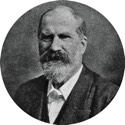


Birth18 Sep 1851, Shiplake, Oxfordshire, England
Death28 May 1920, Allan Bank, Grasmere, Cumbria, England
BurialJun 1920, St. Kentigern's Church, Crosthwaite, Cumbria
FatherRev. Robert *Drummond* Burrell RAWNSLEY (1817-1882)
MotherCatherine Ann FRANKLIN (1818-1892)
Misc. Notes
Church of England clergyman and conservationist, was born on 18 September 1851 at the rectory, Shiplake, Oxfordshire, the fourth of ten children of the Revd Robert Drummond Burrell Rawnsley (1817– 1882), rector of Shiplake, and his wife, Catherine Ann (1818– 1892), the daughter of Sir William Franklin and the niece of the Arctic explorer Sir John Franklin. Educated at Uppingham School (1862– 70) under the headmastership of Edward Thring (his God Father157), where he gained a scholarship and won prizes for athletics and literature, Rawnsley went up to Balliol College, Oxford, in 1870. Here he distinguished himself in athletics and rowing, and gained a third class in natural science in 1874. Under the tutelage of John Ruskin he joined the 'Hinksey roadmenders', and through Ruskin was introduced to Octavia Hill.
After taking his MA Rawnsley was ordained deacon in 1875, and became the first chaplain of Clifton College mission. His success in winning the confidence of the people in one of Bristol's poorest areas, through his unconventional approach to the priestly ministry, paradoxically led to his dismissal. In 1877 he was ordained priest and in 1878 took up his ministry in Wray on Windermere. On
29 January 1878 he married Edith Fletcher (1846– 1916) of Croft, Ambleside. They had one son, Noel, who, because of his parents' numerous activities and love of travel, suffered a somewhat solitary childhood.
Having elicited the support of Ruskin, Octavia Hill, and Sir Robert Hunter, solicitor to the Commons Preservation Society, in 1883 Rawnsley successfully spearheaded the campaign to prevent the construction of slate railways from the quarries above Buttermere, which would have ruined the unspoilt valleys of Newlands and Ennerdale. This, the first of his numerous campaigns to protect the region, hastened the foundation of the Lake District Defence Society. In 1883 he was appointed vicar of Crosthwaite and rural dean of Keswick, where, with the help of his artistically gifted wife, Edith, in November 1884 he founded the Keswick School of Industrial Arts to provide employment and craft training for local people. Rawnsley's interest in education for life led him to take a large part in the foundation of Keswick high school, which opened in October 1898, one of the first co-educational secondary schools in the country, of which he was a benefactor. Here he encouraged the introduction of a broad curriculum, including music, dance, drawing, carpentry, gymnastics, and gardening.
From 1888 Rawnsley served on the new Cumberland county council, opposing the construction of roads over lakeland passes, reducing mining pollution, and organizing the proper signposting of footpaths. His persistence and single-minded determination made him some enemies; his opposition to the granting of new liquor licences offended vested interests and lost him re-election in 1895. Undeterred from his reforming zeal, he went on in later years to inveigh against pornography and against screen violence in the cinema. In 1893 he was appointed canon of Carlisle Cathedral. Five years later he reluctantly declined the bishopric of Madagascar, feeling that he had already committed himself too deeply to the causes of conservation in the Lake District and, more recently, on a national scale. Refining ideas which Ruskin had been the first to promulgate, Sir Robert Hunter, Octavia Hill, and Rawnsley met in the offices of the Commons Preservation Society on 16 November 1893. The result of this meeting was the foundation of the organization which, eight months later, was officially inaugurated under the presidency of Hugh Lupus Grosvenor, first duke of Westminster, as the National Trust for Places of Historic Interest or Natural Beauty. Rawnsley, honorary secretary until his death, oversaw the acquisition of large areas of countryside, particularly in the Lake District and the west country.
An inveterate traveller, in 1896 Rawnsley was sent as a newspaper correspondent to cover the coronation of the tsar in Moscow, and three years later he toured the eastern states of the USA as ambassador for the National Trust. He had previously made visits to the Holy Land and to Egypt to see the excavations of Sir Flinders Petrie and had undertaken several walking and painting tours in the Alps with his wife. In 1912 Rawnsley was appointed honorary chaplain to George V, for whose coronation he had organized the national bonfire celebrations— having previously masterminded the bonfires for Queen Victoria's jubilees. In 1918 he chaired a war memorials committee and organized nationwide pyrotechnic displays in celebration of the armistice. Rawnsley's friendship with the Potter family led eventually to the acquisition by the National Trust of Lake District farms and more than 4000 acres of land given during her lifetime and bequeathed at her death by Beatrix Potter (Heelis). Rawnsley had encouraged Beatrix Potter in her literary aspirations and had been instrumental in helping her to achieve publication of her first books, though Warne's did not accept the verse version of 'Peter Rabbit' which he had composed in the belief that in that form it might prove more acceptable to a publisher. In addition to innumerable pamphlets and articles, children's songs and hymns, Rawnsley published more than forty books, many of them about the life, history, and literary associations of the Lake District, and, as a minor lake poet, a vast output of verse, principally in the form of sonnets. Rawnsley was impulsive, eloquent, irascible, and of a mercurial temperament, with a stocky figure, piercing blue eyes, and bristling beard. Though described by one parishioner as 'the most active volcano in Europe', he was none the less a charming and entertaining host, and, in spite of his heavy commitments nationwide, still found time for the pastoral care of his flock. An acute and sensitive observer of the natural world, a legacy of his schooldays under Thring, he had a profound reverence for the work and philosophy of Wordsworth, which coloured his view of the preservation of lakeland. A family connection with Alfred, Lord Tennyson led to the production by embroiderers of the Keswick School of Industrial Arts of the pall for the poet's coffin at Westminster Abbey. Rawnsley's wife died in December 1916, and on 1 June 1918 he married his secretary, Eleanor Foster (1873– 1959), the daughter of William Frederick Simpson of Grasmere. There were no children of this second marriage. Rawnsley retired from the ministry due to ill health in 1917, to live at Allan Bank, Grasmere, the former home of Wordsworth, where he died on 28 May 1920. He was buried on 1 June in Crosthwaite parish churchyard. Friars Crag, Derwentwater, was purchased by public subscription and given to the National Trust in his memory in 1922.
156
———————————
In 1879 they set out with four friends on a six months trip to Egypt, Sinai and Palestine, travelling over the desert by camel and elsewhere on horseback, returning to England via Cyprus, Greece and Constantinople. It proved an illuminating adventure and Hardwicke later lectured on their experiences. In 1883 the Bishop of Carlisle bestowed on Hardwick the living of Crosthwaite at Keswick on Derwentwater, Cumberland, the vicarage becoming his home for the next 34 years. In 1893, he was made honorary Canon of Carlisle.
Canon Rawnsley was a remarkable man, enterprisingly public-spirited not only in his own parish but over the countryside. […] What soon brought Hardyicke into prominence were the many battles he fought to prevent the beauties of the Lake District from desecration by railroads and the ruthless destruction of old bridges and other picturesque landmarks. In this struggle he grew to be a national figure and it was he who inspired and was a co-founder of the National Trust in 1893, remaining its Honorary Secretary for the rest of his life. In gratitude, the people of the Lake District by public subscription acquired a large tract of land on Derwentwater embracing Friar's Crag, Lord's Island and a part of Great Wood which they presented to the National Trust "In honour of Hardwicke Drummond Rawnsley." He was a man of cheerful disposition and ready wit, given to sprinkling his personal correspondence with amusing verses. He travelled widely and was the author of many books, notably about the historic and scenic interest of the Lake District, including one volume of serious poems. In 1896 he was asked by one of the London newspapers to attend the coronation of Csar Nicholas II in Moscow; and he and his wife Edith were honoured guests at the ceremonies. Two years later they spent five weeks in U.S.A., visiting various Eastern colleges. Feeling the need in 1907 of a quiet refuge, they bought the little holding of "Dunnabeck" in Grasmere, a cottage and a few fields lying high up on the Eastern Fell with a beautiful outlook over Rydal Water. They made the house and garden as perfect as possible and for the next nine years "Dunnabeck" brought a feeling of peace and restfulness into their hurried lives. There, too, their grand-children frequently came to visit them and romped with them over the fells. In 1909 Hardwicke was made Second Canon of Carlisle, and in 1912 Chaplain to the King in recognition of his lifework. From 1909 until his death he spent three months of each year in residence at the Abbey and the remaining nine months at Crosthwaite. He was now past sixty and felt the time near for giving up his work at Crosthwaite. However the outbreak of World War I in 1914 made him reluctant. Then in 1915 came on opportunity to purchase "Allan Bank" at Grasmere, a house standing high on an out-jutting spur between the lake and Easdale, with fields running down to the water and woods rising to the fells. It was just such a home as they had long dreamed of. Wordsworth had lived there in 1808-11; Coleridge, de Quincy and other famous men had foregathered in its studio. By the end of Summer, they owned it and in the following year made it ready to be their home. Sadly, however Edith contracted influenza and died in Carlisle December 31/1916. Without her, he felt he could not carry on at Crosthwaite and preached his last sermon there at Easter, retiring in May to Allan Bank. He continued, however, his Autumn term at Carlisle Cathedral. On June 1/l918, he married a long-time friend Eleanor Simpson whose parental home and fields, "The Wray", lay next to "Allan Bank". She and her two sisters had known the Rawnsleys since girlhood and had travelled with them in Europe. In the months after their quiet wedding they journeyed around England; and in the Spring of 1920 visited Provence and the battlefields of Northern France. On their return to England, his health began to flag and he died at Allan Bank on May 29/1920. Eleanor, who survived him many years, proved a devoted biographer and her interesting book "Canon Rawnsley" was published in 1923. Most of these notes on his life are taken from it. After her death in the late 1950's at Allan Bank, the house was presented to the National trust. It contains a beautiful Della Robbia "Annunciation" about 5' x 3'. which Hardwicke brought back from Italy before the Italian Government stopped the export of art treasures.157
Spouses
Birth1846, Croft, Ambleside, Cumbria, England
Death31 Dec 1916, The Abbey, Carlisle, Cumbria, England
Marriage1878, Brathay, Ambleside, Cumbria, England
ChildrenNoel Hardwicke (1880-1952)